

How I lost my mojo
It was an unexpected aftereffect of my stroke. But I know how to get it back


Fifteen months ago, just about the time the descending fall leaves turned the landscape into a masterwork worthy of Monet, I had a life-altering crisis. The medical term for it is a Transient Ischemic Attack (TIA), which occurs when a blockage temporarily prevents blood flow to the brain. It’s also known as a mini-stroke.
I prefer the non-clinical connotation: “Transitory Biocidal Mind Fuck.” Sounds better. More poetic. And apropos.
The effects of the stroke, short- and long-term, have previously been documented. There was the temporary slobberknocker phase, where chopping vegetables became a life-threatening ordeal, and aphasia, the cognitive disconnect manifested by the inability to process language.
I got over the fine motor skills malfunction, as I’m no longer in danger of accidentally carving off my thumbs.
But aphasia still affects me. I sometimes have difficulty in long-form conversations to properly articulate what I’m thinking. This is a damnable curse, as I enjoy artful discussions with snap responses and witty repartee. Aphasia retards this fluency, like having a short circuit in my internal wiring. I search for the “right” response but find nothing but white noise — I go blank, disconnected, like a comic without a punch line. It’s awkward.
Worse yet, it impairs my writing. It has, at times, become toilsome to write in a clear, intelligible way. I strain to put words together. Phrases and sentences that once flowed easily are simply absent. Ideas float away into the ether. This disjoining discourages me from expressing myself to the point that I too often push away from the keyboard in frustration.
I lost something else: my Mojo
Self-awareness is important in these matters, and I’ll submit that this hardship is close to my mind. But the stroke took something else from me, something that is hard to express in words but no less important.
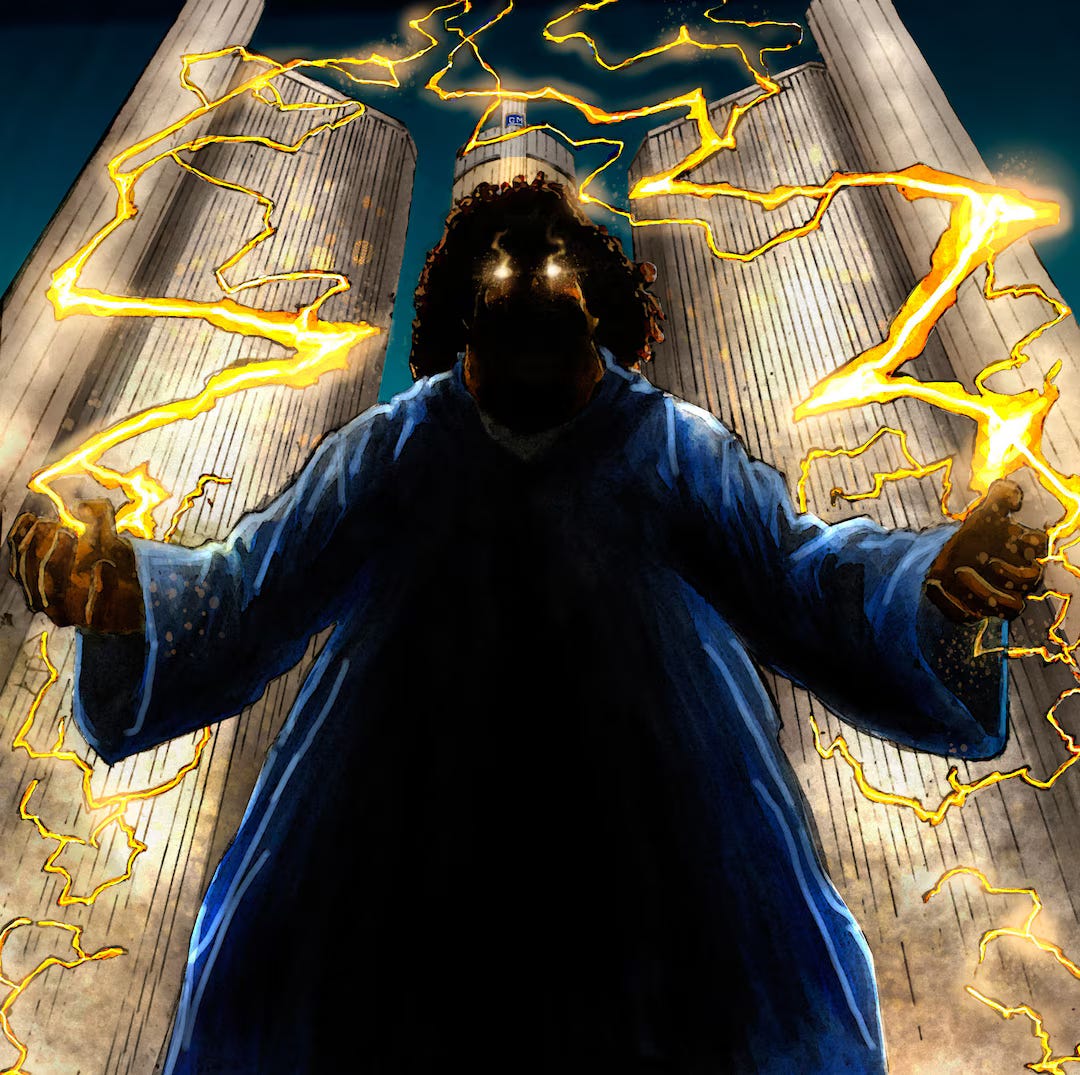
For lack of a better term, I lost my mojo. My juice … my “life force” … my joie de vivre. Not entirely, of course, as I still have the same interests, but sometimes lack the positive energy to pursue them.
Something is not quite right. I feel a disturbance in The Force.
I suppose you’d call it depression. Over the past year, I have, on occasion, isolated myself rather than freely associating with things that drive me — a sunny day, friends, a provocative article, a good workout, a child’s laugh, my writing. The ingredients of a healthy disposition have been replaced by complacency and inaction.
I suppose you’d call it a depression. Over the past year, I have, on occasion, isolated myself rather than freely associating with things that motivate me — a sunny day, a provocative article, a good workout, a child’s laugh, my writing. The ingredients to a healthy disposition are replaced by complacency and inaction.
Compounding this hollowness is the discovery of a cancerous tumor on my right kidney. Diagnosed last spring, I have twice had surgery only to learn that the cancer has somehow baffled my urologist, who has since punted my case to a surgeon at Emory University.
It seems this quarter-sized tumor, which was evaluated as “low-grade,” now requires the attention of one of the most prestigious medical institutions in the country.
Getting my mojo back
All that said, my condition — both physical and mental — could be worse. I’m fully fit and maintain a stretching and weight-training regime five days a week. I continue to write, even though it’s sometimes slow and tedious. I figure it is good to keep exercising my brain, a mental calisthenic if you will, to stay sharp and lucid.
I recently joined the American Institute for Boys and Men, an organization founded by Brookings Institution fellow and author Richard Reeves, which addresses the many challenges of young men struggling to succeed in today’s society. Call it a pet project, as I had three sons and now have a grandson. I see great benefit to them.
Most of all, I believe I can get my mojo back by simply renewing my purpose. It’s an aspiration, a mission, a reason to get up in the morning and celebrate the day. Having a purpose in life is crucial for any man, providing direction, motivation, and a sense of fulfillment. As we age, this becomes even more vital.
So I have a way to kick the blues and put my mojo back into gear. Writing is a purpose. Championing causes is a purpose. Staying mentally and physically sound is a purpose. Being a good human being is a purpose.
As for the cancer that has invaded my body, I’ll find out more when I visit Emory on Jan. 7. The worst that can happen is I’ll lose a kidney. After all, I have another.
May The Force be with me.
###

Jim Geschke was inducted into the prestigious Marquis “Who’s Who” registry in 2021.
Jim: I also had a mini-stroke a couple of years ago. I was already taking blood pressure medicine, but it didn't stop it. BP went up to 230 as I hit the emergency room. I spent 3 days in the hospital room, monitored closely and I couldn't take my eyes off watching the BP number as it slowly came down. No after effects, which I realize is a miracle, but I have great respect for the possibility that another one wouldn't be so benign.
Interestingly, I have a son and a grandson, and joined the Coalition to Create a White House Council on Boys and Men. It does give purpose, although getting politicians to do more than talk is frustrating. My conclusion is that our schools need to train teachers how to better teach boys who learn differently from girls. Our educational system is not tolerant of boys and their more assertive behavior. Too often, they end up in principals' offices and their lack of success in class achievement can damn their self-confidence in pursuing a career and adult life.
I admire your determination to rekindle your mojo. Medical problems or not, mojos take a blow with getting older. Best of luck. -- Vicki Lathom
One foot in front of the other.