

The trouble with "Presentism"
A form of cognitive and cultural bias that flagrantly ignores historical context in favor of modern sensibilities.


Presentism is the intellectual equivalent of showing up at a medieval joust with a clipboard and a “Safe Space” sign. It is the practice of evaluating historical figures, events, and entire civilizations through the lens of modern sensibilities — or, more often, whatever Twitter, TikTok, or the online mob decided was an unforgivable faux pas about the past.
You may know it as a form of “Cancel Culture,” or its surrogate, “Virtue Signaling,”
Historians, correctly, warn against judging everyone in the past by the standards of the present. A logical fallacy, they call it. Comedians see it as comedy gold because nothing is funnier than watching modern champions of the “virtually oppressed” have a conniption fit at behaviors and actions that were, at the time, as normal as bitching about the weather.
Presentism: The practice of judging historical figures, events, and entire civilizations through the lens of contemporary sensibilities.
Just understand. People who lived two hundred, or five hundred, or a thousand years ago did terrible things, because, well, the people in charge were terrible. Millions were murdered without conscience; millions more were enslaved. Cities were sacked, with rape, pillaging, and civilian slaughter being the norm, not the exception. It was a world where life was short, violent and cruel.
Yet, according to today’s morality gendarmes, they really should have known better. You know, a kinder, gentler, more empathetic Genghis Khan.
Christopher Columbus: “Problematic”
The classic offender is Christopher Columbus. By 2026 standards, the man was a monster, a demon who inflicted unspeakable horror upon the people he “conquered.” He didn’t obtain informed consent from the indigenous people whose land he “discovered.” He failed to issue a land acknowledgment. Worse, he brought disease and suffering to the Americas.
The canard, of course, is that “knowing better” in 1492 meant not sailing off the edge of the world. Columbus didn’t have Google Maps, sensitivity training that demonizes colonization, or the slightest inkling about germs and disease. (Reminder: they used leeches to treat an unknown malady). The printing press was only a few decades old, and 95 percent of the population was illiterate. Civilization still thought the earth was the center of the universe.
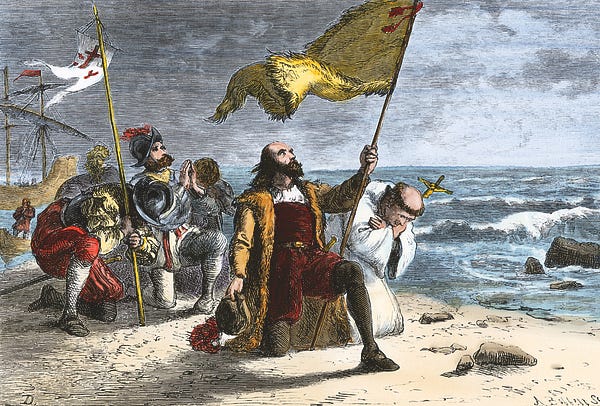
No, Columbus had a compass, some very wrong maps, and the same colonial ambitions as every other European power. Presentism turns him into a cartoon villain who should have known better.
Judging him as uniquely evil is like firing a medieval blacksmith for not using renewable energy.
Founding Fathers and the Ancients
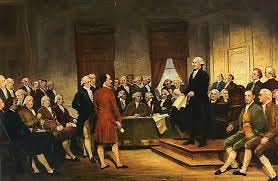
The Founding Fathers provide even richer material. Thomas Jefferson’s famous line—“all men are created equal”— gets dragged through the mud daily for the obvious hypocrisy of slave ownership.
Presentism demands we treat this as simple, cartoonish villainy rather than the product of a specific time, place, and economic system. Jefferson would fail every purity test on Day One. He’d be asked to check his privilege, issue a public apology, and perhaps write a 2,000-word reflection on how his powdered wig perpetuated Eurocentric beauty standards.
Presentism is a way to congratulate yourself about being better than George Washington because you have a gay friend and he didn’t.
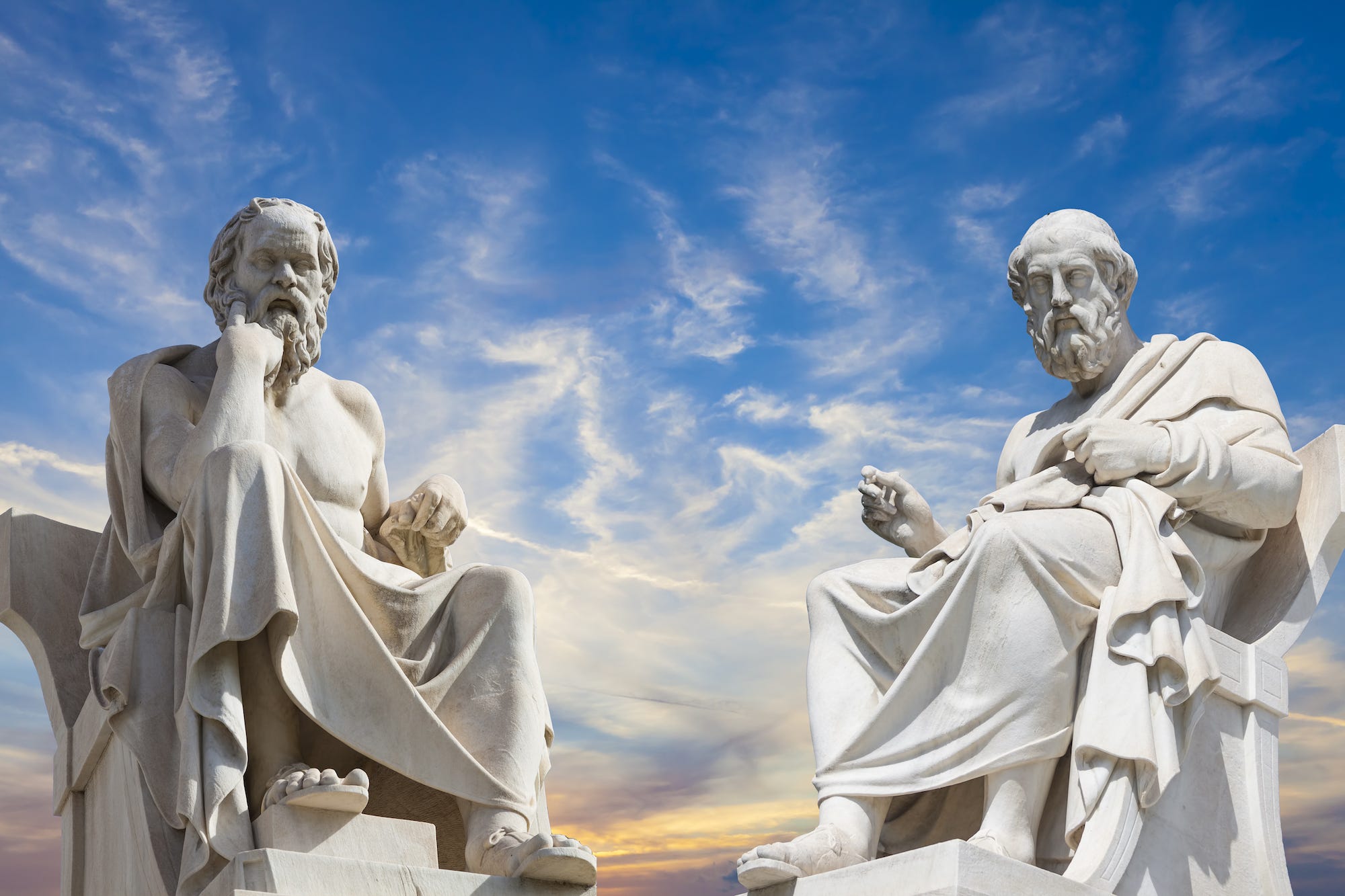
Even the ancient world isn’t safe. Socrates spent his life asking annoying questions until Athens made him drink hemlock. Today, he’d be accused of tone policing, mansplaining, and creating an unsafe environment for students who just wanted to learn without being questioned.
Aristotle gets dinged for placing women in a separate, lesser rank and for being overly categorical. The man literally invented formal logic, yet presentism reduces him to “problematic for his time” (which was 2,400 years ago).
It’s not just the famous …
Presentism doesn’t stop at famous names. It affects how we view our own ancestors.
Your great-grandparents survived world wars, economic collapse, and the absence of air conditioning, antibiotics, and oat milk. They raised children without therapy apps or participation trophies. Yet we judge them for smoking, cooking with lard, and being too busy trying not to die of polio or tuberculosis instead of updating their language around gender.
The presentist mind sees this as a moral failure rather than the simple fact that survival used to be a full-time job. They feel superior to every previous generation without understanding why people believed what they believed or did what they did.
I believe we call that “context.”
The presentist mind sees this as a moral failure rather than the simple fact that survival used to be a full-time job. He flatters himself; he feels superior to every previous generation without understanding why people believed what they believed or did what they did.
The funniest (and most dangerous) part of presentism is the false assumption that we would have been the heroes in any other era. As the arbiters of history, maybe we would have been busy arguing about whether the wheel was culturally appropriating circular objects rather than noticing actual problems.
The truth is, we most likely would have defended slavery if our family owned the plantation, supported conquest if it brought cheaper spices, and stayed silent during purges if speaking up meant losing our job … or our head. Reality.
Moral courage is easier when the only risk is losing online followers. The result is a strange kind of historical snobbery: we are enlightened; they were benighted.
History is flawed. So are we
Of course, rejecting presentism entirely isn’t the answer either. Some progress is real. We no longer burn witches or duel over insults (mostly). But wisdom comes from holding two thoughts at once: people in the past did terrible things by our standards, but they were also operating with tools, knowledge, and pressures we can barely imagine.
Columbus was flawed. Jefferson was flawed. Your ancestors were flawed. So are we. The difference is that history hasn’t finished judging us yet.
So the next time you feel the urge to cancel Aristotle for insufficient intersectionality, topple a statue, or demand that Vikings attend sensitivity training before their next raid, pause. Ask what someone from 1492 or 1776 or 400 B.C. would make of your moral blind spots.
They’d probably find plenty. And they wouldn’t even need social media to point them out.
###

Jim Geschke was inducted into the prestigious Marquis “Who’s Who” registry in 2021.
...some of us are more flawed than others. Very thought provoking, Jim.