

Three bold predictions for 2026
At the risk of being a casualty of the Cassandra Complex, here are my prophesies for our nation's 250 birthday
The Cassandra Complex describes a situation where a person's valid warnings, concerns, or insights are consistently disbelieved or dismissed by others, leading to his/her frustration and resentment. It’s kinda like Aesop’s The Boy Who Cried Wolf, except the alarmist may well have an untarnished reputation and the wolf very real teeth.
It stems from the Greek myth of the Trojan priestess Cassandra, who is cursed by the god Apollo to prophesy the truth, but is never to be believed. In the epic poem The Iliad, she foretells the fall of Troy, issues a warning to its citizens, but is met with scorn and derision. The rest is worthy of a Greek tragedy.
The lesson: the gift of prophesying the truth can be a real bummer.
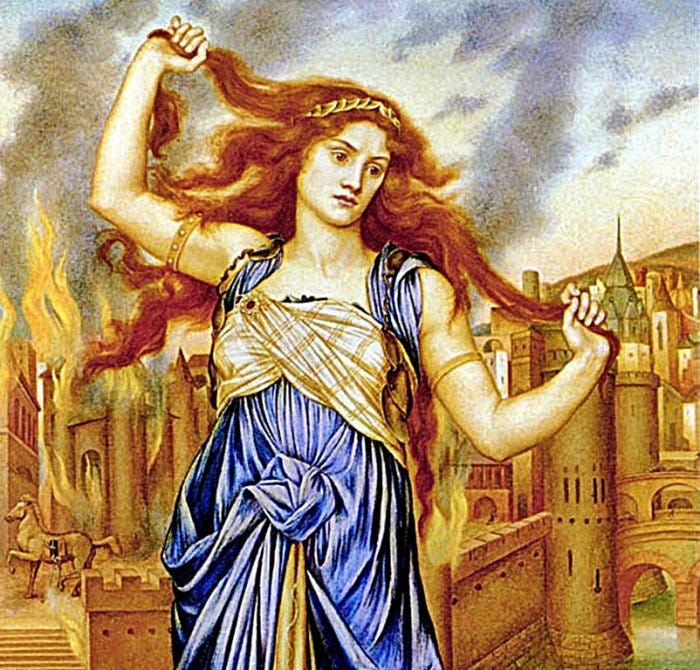
The Cassandra Complex can manifest psychologically, for example, as the inability of one married partner to convince the other of a painful truth, like crippling debt or other relationship issues.
In broader cultural contexts, the Cassandra Complex is equally pertinent. In 1962, author Rachel Carson published Silent Spring, an environmental study documenting the harm caused by the indiscriminate use of the pesticide DDT. The chemical industry fiercely opposed Carson, and it was another decade before the United States Court of Appeals for the District of Columbia finally banned the use of the dangerous chemical.
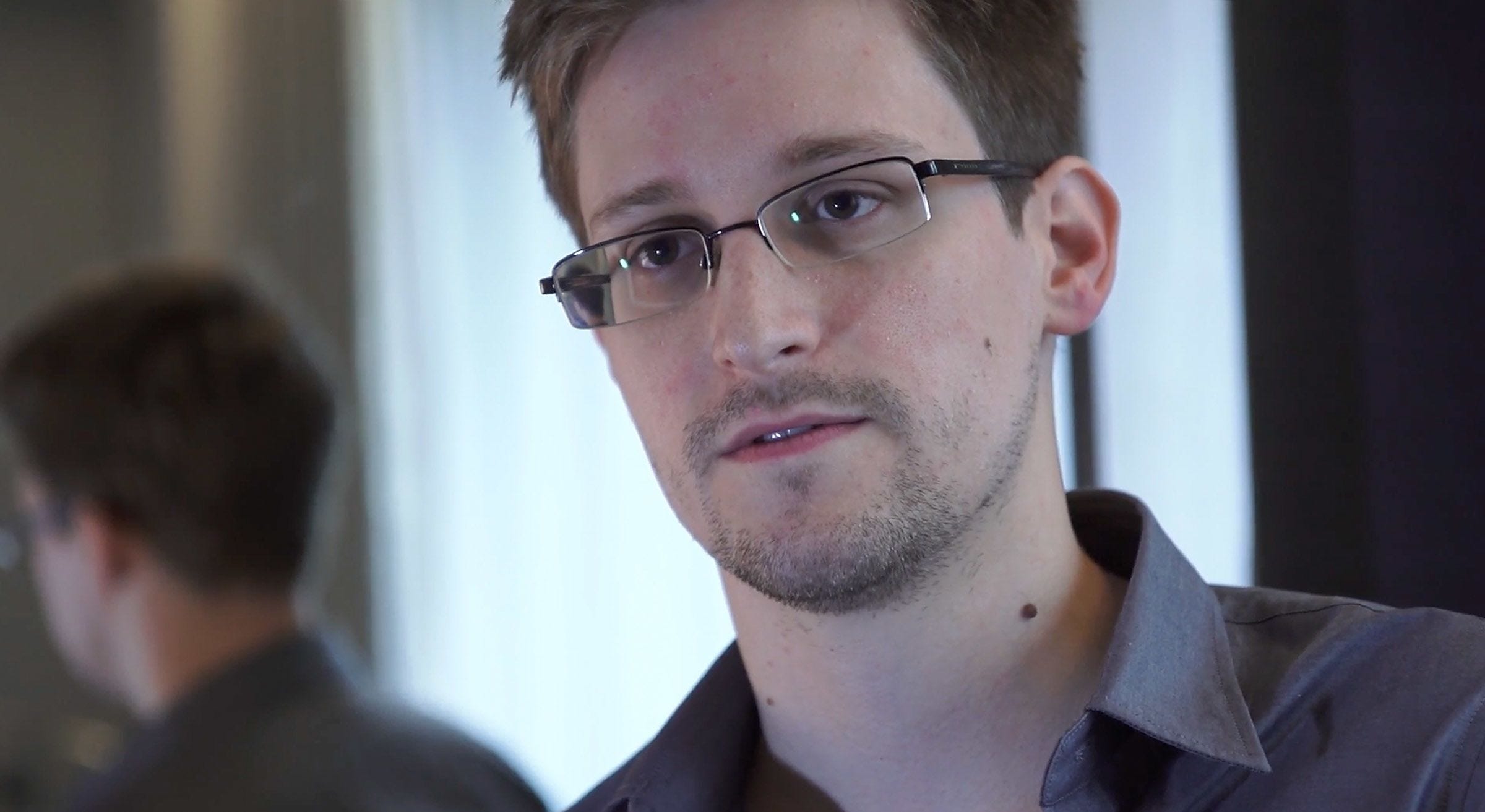
In 2013, Edward Snowden warned that the U.S. government, specifically the National Security Agency (NSA), was illegally spying on international allies and U.S. civilians. He leaked as many as 1.5 million documents, including tens of thousands of files on allies England and Australia. He was accused of three felonies under the Espionage Act (i.e. treason), fled the country, and has been living in exile in Russia since. Eventually, it was uncovered that the NSA and a large segment of the surveillance industrial complex1 were indeed spooking our friends and citizens.
The point is, sometimes we are put in the impossible position of telling the truth. This not only applies to whistleblowers and leakers, but to ordinary citizens who expose fraud and duplicity (see: Nick Shirley).
At the risk of becoming a victim, or martyr, of the Cassandra Complex, I am boldly making three predictions for 2026.
Three Predictions for 2026
Prediction 1: Trump 2.0 will turn into Lame Duck Trump
We, the people, have become inured to the audacious (some would say authoritarian) governing style of the Trump administration. Since his inauguration one year ago, he’s been enforcing the law often by self-prescribed means. He has been effective, for the most part, despite the objections by the entire Democratic Party, which has exigently opposed him at every step because … well, he’s Donald Trump.
Trump rules by fiat, characterized by Executive Orders (more than 200 in his first year), public sector purges, challenges by the courts, and “because I said so” edicts, all under the banner of America First. Among his decisions are the imposition of arbitrary tariffs, the hard-line enforcement of immigration laws, the deployment of the National Guard in five American cities, and foreign policy interventions in the Middle East, Asia, Africa, and now Venezuela.

Although I am amenable to the substance of his policies, even as an advocate of some, I often wince at his vitriolic reactions to criticism. The recent post on Truth Social about the death of film director Rob Reiner, for example, was contemptible. In fact, I find his responses to many things shameful. He’s the ultimate “non-statesman,” demanding loyalty while seeking vengeance against those who oppose him. All of this does not necessarily make him a deficient leader, but it certainly points to him as a reprehensible human being.
Meantime, Trump Fatigue is slowly creeping in. Americans, even Republicans, are questioning his actions. MAGA has become more and more fractious. He’s been challenged repeatedly by the courts and in the court of public opinion; in essence, his second term is leaning toward a lame duck presidency.
The growing power of the Executive Branch is nothing new
Contrary to prevailing attitudes, the increasing power held by the Executive Branch is nothing new. It began with President Barack Obama in 2014, who, frustrated by inaction in Congress, said flatly: “Remember, I have a pen and a phone.” He then used both liberally. President Joe Biden carried the mantle further, signing more than 160 EOs. Trump has extended the power that originated from his immediate predecessors for more sweeping changes.
It started with President Barack Obama in 2014, who, frustrated by inaction in Congress, said flatly: “Remember, I have a pen and a phone.” President Joe Biden carried the mantle further, signing more than 160 EOs. Trump has extended the power that originated from his immediate predecessors for more sweeping changes.
But recently, there have been indications of cracks in Trump’s scorched-earth approach to governance. According to JustSecurity, a litigation tracking site, there have been more than 567 challenges to his authority in various courts. To date, he has lost 191 cases (31 pending appeal) compared to 113 victories (23 pending appeal). The rest are still in litigation.
Republicans have begun to push back — on the release of the Epstein files, for example — and the Trump brand has little influence when he is not on the ballot in special elections and midterms. Moreover, his EOs can be wiped away on Day 1 of a new administration, undoing actions he initiated. His legacy may be short-lived.
Finally, if Republicans lose the House of Representatives in the midterm elections in November, as many predict, the second half of his term will be tied in knots by an inevitable fight against impeachment. In fact, he admitted as much the other day.
Trump’s rule has been transformative and divisive, prioritizing swift executive changes and loyalty while navigating legal, public, and international pushback. This approach has advanced his goals, but at the cost of institutional norms and widespread disapproval.
Prediction 2: Cell Phones will be at least partially banned in schools in all 50 states
It’s unusual for an academic to write a book that more than a handful of nonacademics ever hear about, let alone ignite a national movement against the beast known as Social Media. But that is what New York University psychologist Jonathan Haidt, co-author of The Coddling of the American Mind (2018) and author of The Anxious Generation (2024), has pulled off.
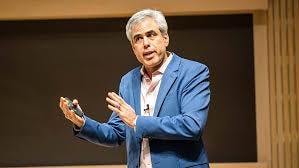
The crux of his work is a straightforward observation: Starting around 2013, a mix of social media and cell phones seemingly conspired against Gen Z. It was especially harmful to girls, who saw evidence of a 90 percent spike in mental health problems, specifically depression and anxiety. Gen Z has forgotten how to play, how to relate to other people, how to screw up, and how to grow. Now, thanks to Haidt, people are waking up.
As of late 2025, 39 states, according to Haidt, have some sort of restrictions on cell-phone use in schools, and Australia has barred anyone under 16 from social media.
Starting around 2013, a mix of social media and cell phones seemingly conspired against Gen Z. It was especially harmful to girls, who saw evidence of a 90 percent spike in mental health problems, specifically depression and anxiety. They forgot how to play, how to relate to other people, how to screw up, how to grow. Now, thanks to Haidt, people are waking up.
I predict this trend will continue, with all 50 states adopting some controls over the dangers of screens, not just the phones, but also other devices (i.e., Chromebooks). More and more schools are integrating large Interactive Flat Panel Displays (IFPDs) that act like giant tablets with touch/pen input for dynamic lessons, alongside traditional projector screens for mass viewing. This will put the power and learning control in the hands of the skilled teacher rather than the distracted student.
Haidt, the “high priest of heterodoxy,” has done more than anyone anywhere to empower teachers and parents to reclaim some kind of sanity to the education process. In a world that increasingly feels like Silicon Valley’s laboratory, Haidt has been a breath of fresh air.
Prediction 3: Low birth rate will be recognized as an existential crisis
Low birth rates in developed countries, often falling below the replacement level of about 2.1 children per woman, have profound long-term implications across demographic, economic, and social sectors. In the U.S., the birth rate has fallen from 2.4 in 1990 to 1.6 today.
Such anti-growth trends are unsustainable.
I predict population growth, or lack thereof, will become recognized as an existential crisis in 2026.
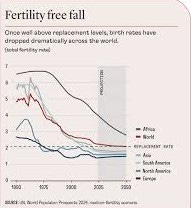
Demographic Shifts
Sustained low fertility accelerates population aging, with a higher proportion of elderly people relative to the working-age population. Fewer young people entering the workforce creates wage-earning imbalances, reducing the demographic dividend that once fueled growth. For example, for every 100 South Koreans living today, there will be four great-grandchildren. That’s correct: four.
Strain on Social Systems
Aging demographics increase dependency ratios, putting pressure on the pension systems, healthcare, and social security. It is now estimated that governments may face fiscal challenges, requiring higher taxes or reduced benefits to sustain these programs.
In the U.S., pay-as-you-go programs such as Social Security will reach critical mass by 2033, when benefits are scheduled to be reduced by 23 percent.
Social and Policy Implications
Persistent traditional gender roles amid economic progress can exacerbate fertility drops, reshaping family structures and societal norms around work, childcare, and marriage. This may necessitate radical policy rethinking, such as enhanced family support, immigration reforms, or incentives for childbearing.
Will I be proven correct on these formidable issues? Am I wrong? Or am I like Cassandra?
I dunno. Time will tell.
###

Jim Geschke was inducted into the prestigious Marquis “Who’s Who” registry in 2021.
Journalist Michael Schellenberger coined the phrase in 2023, identifying the 17 U.S. intelligence apparatus
Trump inherited a mess beyond comprehension. The influx of millions of illegal immigrants put our country on a path of destruction. I might not like everything he does or how he does it, but he definitely is a man who loves our country and will do everything in his power to save it. G-d help us if the Republicans lose their majority.
I like your style, Jim